Showing posts with label Narrator Interviews. Show all posts

Thursday, July 18, 2013

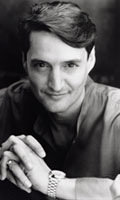
The Inside Scoop on Narrator Pete Larkin

I am thrilled to be able to share a more in depth interview today with Pete Larkin. He was so kind as to participate in Five on Friday AND answer some additional questions for me. As you know from my previous reviews of the Duane Swierczynski's Charlie Hardie trilogy (Fun and Games, Hell and Gone, Point and Shoot) I'm a big fan of Pete's work.

Pete even provided something a little different for us. He answered my questions on a sound file, so not only will you get to know the answers to my questions, but you'll get to hear them straight from Pete himself! I hope you enjoy this inside look into the man behind Charlie Hardie's voice! And away we go....


1. You started your career in radio, but now your resume includes announcing for the NY Mets, theater, and of course audiobook narration. How did your career evolve in those directions?


2. I’ve had several narrators who started out as stage actors tell me how challenging audiobooks are because they no longer have their body language and movement to help in expression. But you started in radio where you also lacked those visual cues. Do you find that narrating is more in tune with radio or is it still a challenge in that way?


3. As a narrator, you have done a lot of non-fiction, including political books. Do you ever find challenges in the content of the books or is it just another day at the office, and you don’t really need to necessarily feel a connection with the material?


4. You mentioned in another interview that fiction is harder to narrate than non-fiction because you’re maintaining the characters throughout the life of the book. So how do you prepare for those books?


5. Do you communicate at all with the authors?


6. Is there anything in narrating a book that you absolutely dread? Like you see it in the text and just think, “oh no!”


7. Is there something you always wished you could narrate but haven’t had the chance to do so?


8. Tell us a little about the book that’s been your biggest challenge to date.


9. And what’s been the most rewarding to date? 


10. Do you listen to audiobooks yourself or do you want to go home and the end of the day and be completely away from “work”?


11. What’s the last book you recommended to someone else?


12. Is there anything you wish more people knew about audiobook narrators and what they do?


13. I’m a big crime fiction fan and we’ve discussed your narration of Duane Swiercynski’s Charlie Hardie trilogy. How was your experience narrating those books?


14. You’ve also done work on some recordings that included multiple narrators. When you’re doing a book with multiple narrators do you record with the other narrators or is some tech guru splicing everything together after people have individually recorded?


15. Last question, promise…there is quite a bit of musical experience in your background as well: singing, playing the guitar or bongos, performing in musicals. Where did that interest come from and have you ever had an opportunity to use it in narration?


Many, many thanks to Pete Larkin for his time, his candid responses and this fun format. I hope you enjoyed learning more about a great audiobook narrator today! Another audio Pete narrated that you may be interested in checking out is The Manual of Detection (for which he won an Earphone Award!). Happy listening everyone!

Friday, June 7, 2013

Five on Friday - Audiobook Style!

Happy Friday everyone. I hope your June is off to a stunning start. Yesterday we had a cold day. I think Mother Nature forgot it was June or something.

I have to start off today by congratulating Tom from Texas who won the Walt Longmire contest here at the blog. I'll have some more contests coming up throughout the summer so stick close!

If you didn't have a chance to check out my interview Tuesday with the nice folks at Old Books on Front Street, you can do so here. They didn't realize you can't shut me up when you get me talking about books and this blog! Does anyone live in their vicinity? If so, please make sure you tell them I said "hi" and visiting them will be #1 on my itinerary the first chance I get to visit NC.

Pop Culture Nerd posted the Nerdy Special List for June this week. You can check out my June recommendations there.

That's all I have for general links this week, so let's do the contest round-up for all you folks who need some free books:

Oh, oh, oh, oh the Friday Reads folks are giving away Alafair Burke's new book, If You Were Here (came out this week).  Plus William Dietrich's The Barbed Crown. So that's one you won't want to miss!

Lesa has a "Sleep Cozy" themed giveaway this week. 

And at Criminal Element for all you hard-core, old school Stephen King fans, they're giving away copies of King's new Joyland.

I went in search of some audiobook giveaways since this IS Audiobook month and all. I'm hoping to host my own shortly, but here's what I found for today:

The Geeky Blogger has a "pick-your-own audio" contest going. She's taking entries until the end of the month.

Super Librarian has a copy of The Fault in Our Stars to giveaway.

And,

Literate Housewife has a gift copy of Beth Hoffman's Looking for Me (you need to have or open an Audible account for this one). Entries must be received by Wednesday on this one.


This month I'm featuring audiobook narrators for the 5 on Friday. I'm super excited about the narrators who have taken me up on participating. I don't know about you, but I've always been interested in the people behind the voices. We've had some features of narrators in the past and it's fascinating to learn about them. So I'm excited about this month. I hope you enjoy it.

The first narrator I met via Twitter some time ago. She's great fun to chat with and a very accomplished voice artist with a slew of AudioFile Earphone Awards to back that up.  In addition, Xe Sands is the grand master behind the Going Public...In Shorts extravaganza going on this month. What an accomplishment! Many of you know her from the social media world or from listening to her narrations, so I'm sure you're as excited to see her responses as I am (they're so wonderful), but for those who are meeting Xe for the first time, it is my great pleasure to introduce her and welcome her to Jen's Book Thoughts!

This was a treasure Xe found, but isn't it a perfect photo for her visit here?

My favorite sound is  my husband’s heartbeat when I lay my head against his chest. It makes me feel safe. There is so much love there. There is so much everything there, in that one sound.

The last book I recommended to someone was The Time Traveler’s Wife – to my mom. I’m horrible at expressing why a book consumes me, but this one did. Henry is…phenomenal. The writing is exquisite, and although the way Neffenegger tells the tale can be confusing, it really works overall. The characters are confused the whole way through – why shouldn’t the readers also be confused?

Five songs on my iPod/music player right now are 
  • The Sea and the Rhythm, by Iron and Wine 
  • My Morphine, by Gillian Welch 
  • Songs from an American Movie Pt. 1, by Everclear 
  • Closer to Fine, by the Indigo Girls 
  • Breathe (extended mix), by Télépopmusik 

My favorite t-shirt (that I own) is an absolutely gorgeous and sensual depiction of Medusa. Always makes me reconsider the myths and legends we all grew up with in a different way. After all, even in mythology, the story is told by the victor. It also has a tiny spider on it, and as I’m phobic, it’s always empowering in an odd, completely illogical way, to prove to myself that I can stand having a spider dangling on my chest.

The #1 item on my bucket list right now is pure fantasy, but…to move back to San Francisco, which will always have my heart (no cheesy Sinatra puns intended). It’s been many, many years away now. 

I love the thought of that t-shirt! What fun to know some little tidbits about the people behind the voices we hear in our audios. Plus, they're little tidbits about someone who's really become a friend through the social media sphere. This has been so fun! I'm going to have to coax Xe into coming back for another feature at some point, don'tcha think?

Many thanks to Xe for this great contribution to our series. And as always, thanks to you all for making time to stop by and share the fun! Have a wonderful weekend and Happy Reading--Happy Listening!

Thursday, July 8, 2010

Audiobook Thursday: J.J. Myers

Today I am extremely honored to be chatting with another wonderful audiobook narrator, J.J. Myers. If you are familiar with Chris Grabenstein's Zack and Judy middle grades mystery series on audiobook, you know her voice well. She narrated both THE CROSSROADS and THE HANGING HILL. As we'll talk about in her interview, J.J. not only narrates Chris's books, she's married to him as well. J.J. has done voice over work for commercials and promos, in addition to performing live on stage. But, you don't want to hear me read her resume, you want to hear from J.J. herself, so allow me to introduce the wonderfully talented, J.J. Myers:


Q.
Tell us a little about J.J. Myers the person. As listeners/readers, we don’t have as much opportunity to get to know narrators as we do book authors. So what could we expect to see on a J.J. Myers bio page?
J.J: I’m originally from Michigan but after I graduated from Northwestern University (where I studied singing and acting) I moved to New York to pursue musical theater. I’ve kept New York as my home base but I’ve also worked all over the country and, for some reason, many of the shows I’ve been cast in have religious themes. I’ve appeared in NUNSENSE, JOSEPH AND THE AMAZING TECHNICOLOR DREAMCOAT, GODSPELL, DO BLACK PATENT LEATHER SHOES REALLY REFLECT UP?, and FIDDLER ON THE ROOF, to name a few. Now that I’m married to the world’s best author (Chris Grabenstein), I enjoy working in voice overs because I don’t have to do eight shows a week or go on the road -- but I’m still acting. When I’m not working I volunteer with animal rescue. Chris and I share our home with four wonderful rescued animals (three cats and a dog).
Q. What led you to audiobook narrating?
J.J: I was doing some voice over work for a program that teaches English as a second language. The producer asked me to audition for the audio book of THE ORCHID THIEF (the book the movie ADAPTATION is based on) and I got the job. After that, I received offers for other audio books.
Q. And you have a very unique situation. I spoke recently on the blog about, what I termed, a “perfect triangle” in the audiobook listening experience. That would be the writer creating a great story, the narrator bringing it to life, and the “reader” experiencing it. You live with a writer, a writer for whose stories you narrated. Do you feel that unique situation helped in your narrations of THE CROSSROADS and THE HANGING HILL? Hurt? Didn’t make any difference at all? And why?
J.J: No question that it helped. I am Chris’ first editor so I read the books when he has just finished the first draft and we discuss the characters at length. This can be as long as a year before I record the audio book so I’ve “lived” with these characters and I know them fairly well. We also spent one airplane ride to Los Angeles going over voices for THE CROSSROADS. It was fun for the folks sitting behind us, I’m sure.
Q. You’ve narrated adult fiction, children’s fiction, non-fiction. Do you have a preferred genre or classification that you like to read?
J.J: I love recording Children’s Books. Of course Chris’ YA books are my favorite but I also love recording books for younger kids, like EARL THE SQUIRREL by Don Freeman, which is very cute.

I also like working on books connected to a cause, like Live Strong: Inspirational Stories from Cancer Survivors, which I did for the Lance Armstrong foundation (I’m credited as Jennifer Jay Myers).
Q. Do you find any types of books more challenging than others to narrate?
J.J: Honestly, Chris’ books are the most challenging for me. I remember calling him from the recording session for THE CROSSROADS and complaining that, between live people and ghosts, there were over forty characters and I had my hands full trying to keep them all straight. I said something like, “Please think about this as you are working on the next book in the series.” Chris got off the phone and added a theatrical pyrotechnics expert with an Italian accent to THE HANGING HILL just to challenge me even more! As my friend Jeff Woodman will tell you, accents are not my favorite thing.
Q. How about characters? In fiction, has there been any type of character who’s just given you fits when you try to grasp their persona?
J.J: Coming from an acting background, I can usually get a grasp on a character’s persona, but I had a unique challenge with THE CROSSROADS because the character of Judy is based on me. I had to find a way to give Judy my voice and personality while sounding different from the narrator, who, of course, is also me.
Q. What was the hardest book, to date, that you’ve had to narrate?
J.J: THE HANGING HILL was definitely the hardest book I’ve ever done. In addition to the Italian guy I already mentioned, there are three Tunisians, all men of about the same age, and a host of other characters (both dead and alive). Some characters are heard from at different points in their lives so the challenge is to have them sound like their younger or older selves.

Another very challenging project I worked on was a college textbook based on the movie THE MATRIX -- The Matrix and Philosophy: Welcome to the Desert of the Real (as Jennifer Jay Myers). This was challenging because I wanted to understand what I was saying, so I rented the movie and really studied before the recording.
Q. What kind of book makes you excited to go to work and record it? And why? What’s special or different about that kind of book?
J.J: Again, I have to say the kids books. I’m a big animal nut and kids books tend to have lots of animal characters. I’ve voice everything from a “happy horse” to a “young female worm.” I guess this is special for me because I fell in love with critters at a very young age and I hope these stories will help other kids do the same.
Q. Walk us through what you normally do to prepare to record a book.
J.J: I always read the entire book before I start recording, just in case there is something that happens at the end that should really “color” a character right from the start. I make a character list with a note of the page where they first appear and anything the author has included, such as “gruff voiced man” or “mousy woman” to help me find the voice. I also look up any words I’m not sure how to pronounce.

With a non-fiction book, I check any names of real people who are mentioned and make sure I know how they are pronounced. I was doing a series of business books recently and there were many names of leaders in various fields that were extremely hard to pronounce. In one case, I learned that the man was booked for a lot of speaking engagements so I called his agent and asked how he said his name. In another case, I actually found the guy’s cell number so I called it and heard him say his name on the outgoing message. Thank goodness for the Internet!
Q. Have there been any cases where you didn’t follow that normal process of preparation?
J.J: Sometimes there is an extra step. When Chris is writing, he collects pictures that represent the characters. Looking at these photos helps me find the right voice for the characters.

Also, kids books often have illustrations of the characters in the story, so I use these to help me create a voice that matches. For example, if the hedgehog is wearing glasses, maybe he should sound like he’s very smart or a bit nerdy.
Huh, so in the children's books, there's actually a perfect square, not a perfect triangle. We have the writer, the illustrator, the narrator and the reader.

Q. Then when you go in to record, what’s a typical day like for you recording a book?
J.J: I usually work for six hours with a half hour for lunch when my stomach starts making noises.
Q. If you were given the option to narrate ANY book you wanted, what would be your dream narration?
J.J: Any future kids books by Chris Grabenstein! And any children’s book about rescuing animals. So I hope I get a chance to narrate Chris’ new series for Harper Collins, RILEY MACK AND THE OTHER KNOWN TROUBLEMAKERS, which will come out in winter 2011 because there is a subplot in it about rescuing dogs from a puppy mill (wonder where he got that idea?).
Q. Since a big part of your job is reading, do you do much reading for fun? If so, what do you enjoy to read? What will you pack for the beach this summer?
J.J: This summer I will pack ROLLING THUNDER by Chris Grabenstein, of course! It’s the perfect beach read. It even has its own beaches.

I don’t seem to have much time to read things just for fun anymore, but, when I do, it’s usually a non-fiction book about animals or something by Malcolm Gladwell.
Well, gosh, I happen to think ROLLING THUNDER is a great choice for this summer, too!

Q. How about audiobooks? Do you listen to audiobooks yourself? Any narrators that you especially enjoy?
J.J: I don’t listen to audiobooks regularly, but, if I’m about to record a book in a genre that’s new for me, I’ll listen to some well-reviewed books in that genre before I start. As far as narrators I enjoy, I think what Jim Dale did with his narration of the HARRY POTTER series is truly amazing (and it makes me feel like a wimp for complaining about 40 characters).

But, honestly, my favorite audio book narrator is Jeff Woodman. He inhabits his characters so well that I can really see them. And no matter how extreme the person he’s playing is written, he never lets his characterization get in the way of the story.
Oh gosh, how much I agree with that statement! I can't tell you how thrilled I am for the two of you to be my first two narrator interviews on the blog!

Q. How about hearing your own voice? I’m not anywhere close to a professional, so it may just be my neuroses, but I have a dickens of a time listening to my own voice. Do you find your overly critical of yourself when others are saying it’s good?
J.J: What’s hard for me is listening to the audiobook when my husband, the author, is right next to me! The author is usually not involved with the audiobook recording, so Chris and I are hearing the book together for the first time. Of course I hope I’m happy with it, but my biggest concern is that he likes it. I usually hear a few things I’d like to change, but, so far, Chris has been happy, and that’s what counts!
Q. O.k., so I went a little gung ho on the audiobook questions. But you also do voice over work for commercials and promos, correct? How does that work compare to what you do for a book?
J.J: It takes a lot less time! Commercial or promo recording sessions rarely last more than an hour. And you usually don’t get the script until you are just about to record so there is no prep work.
Also, in an audiobook, you are painting the entire picture with your voice. But with a TV commercial or promo, your voice is heard while a picture is seen so you need to be aware of that and adjust your read so the audio “fits” with the video.
Wow! I never would have thought about that.

Q. And you’ve also performed live on stage! That has to be the bigger adjustment. Performing live as opposed to being in the recording studio. For you, what are the benefits to each? Are you more comfortable with one or the other?
J.J: You are right, that’s a big adjustment. I love both, but, after all my years of making sure my voice was heard in the last row, it took me a while to learn that the microphone is very sensitive. I was told to think of the mike (or mic) as someone’s ear.

Another big difference is that when I’m recording, I don’t have to wear a lot of make-up!
Q. Now I’m assuming (so correct me if I’m wrong) that if you are in the studio recording an audiobook or a voice over for a commercial, that you’re pretty much working on your own. Even if there are others involved, you don’t record at the same time, right? So then how does that change things for you when you’re on stage performing with others at the same time? Or does it?
J.J: Most audio books are narrated by one person, so you are in the studio alone. But I have worked on some other projects where several of us have recorded together. In fact, I met Jeff Woodman because we were cast in the same educational recording project. I prefer working with others, both on stage and in the booth.
Q. Who have been some people you’ve really enjoyed working with on stage?
J.J: I was lucky enough to do a production of SHOWBOAT with Donald O’Connor. A charming performer and a wonderful man.
Q. You’ve had a tremendous number of accomplishments already, but are there any other “must dos” on your bucket list?
J.J: I’d love to voice an animated character, preferably an animal.
Who do we know at Disney that can hook J.J. up on that one?

Q. When I had Jeff Woodman to the blog, he shared with us what he does to make you cringe. Do you have anything in your arsenal to return the favor?
J.J: I honestly did cringe when I read that!! I don’t stoop to his level and do anything to purposely annoy him, but I’m sure he’s cringed when he heard my first attempt at an accent or two.
Q. Is there anything you wish the common person knew about recording audiobooks – or demos or commercials – that we didn’t talk about?
J.J: I’d like people to know how much their feedback means. With stage work, you get feedback (and hopefully applause) from your audience. You can tell if they are with you. But with audiobooks, it’s not as easy to know if your “audience” is pleased. I love hearing from people who have enjoyed listening to the books and was delighted when my CROSSROADS performance won an Earphones Award from AudioFile Magazine.
O.k. all you folks who do the audiobook reviews, too! Take note. Your feedback is greatly appreciated.

Q. Very quickly, before I get to the last question, I have to ask about the fun primates on your website. Is there significance to them? Or are they just fun critters?
J.J: Your question tells me that they are doing what I hoped they would do! I tend to be cast for upbeat, happy kinds of reads so I wanted my website to reflect that. The fact that you asked about the “fun primates” makes me happy. I recently heard from a branding expert who had visited my website. She said, “You can’t go wrong with monkeys!”
Q. I’m sure you already know about the six-word memoir project since Chris participated. Now it’s your turn to be on the hot seat. What would be J.J. Myers six-word memoir?
J.J: Animal rescue nut talks for cash.


Another great one for the scrapbook! We have to wish both Chris and J.J. a belated Happy Anniversary, as they celebrated their anniversary this past weekend. They were married on the 4th of July so they'd always have fireworks! Thank you so very much, J.J., for taking time to chat with me and letting me share that here on the blog. We'll all be on the lookout for your animated character role! In the meantime, we'll hear you on the audio waves!

Technorati Tags: , ,

Thursday, June 17, 2010

Audio Book Thursday: Narrator Jeff Woodman

As you know - because I've been talking about it all month - June is audio book month. And while I hope to do many more of these, I'm so excited to tell you that in honor of audio book month I have an interview with audiobook narrator Jeff Woodman. If you are unfamiliar with Jeff's work, I STRONGLY encourage you to take a look at his audio-bibliography because I'm certain you'll find something that you would enjoy. He's narrated a wide range of books: adult and children's, fiction and non-fiction. If you read here regularly then his name should at least sound familiar because he is the voice of Danny Boyle; he narrates Chris Grabenstein's John Ceepak series.

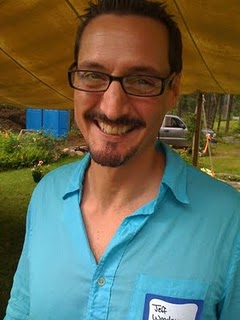
Jeff has a million things going on in his life both personally and professionally, but he still took time out to chat with me at length and I'm so thrilled to share that with you today. Not knowing much about the recording process or about Jeff himself, my questions started out kind of general, but Jeff led those questions to many fascinating little nuggets of information. So let me stop yammering and put the spot light where it rightly belongs. Ladies and gentlemen, Mr. Jeff Woodman!

Q: Tell us a little about Jeff Woodman the person. As listeners/readers, we don’t have as much opportunity to get to know narrators as we do book authors. So what could we expect to see on a Jeff Woodman bio page?
Jeff: Personal Bio:I was raised in New England, and graduated from the SUNY Purchase Conservatory Theater Program. I live in NYC and have been happily partnered for 21 years.(Of course I was a mere child when we met.)We split our time between the city and a house in the mountains, where our gardening efforts go to support the local deer. I'm an avid film buff, especially the great product of the “Golden Years” of the Hollywood studios.
Professional Bio: OK, I'm gonna cheat here and slug in the bio that I use in theater programs! Broadway: Cymbeline (Lincoln Center). Off-Broadway: Tiny AliceBoys in the Band (WPA), The Libertine (Theatre Row), A Pirate’s Lullaby (Rattlestick), Smiling Through (Theatre Four). Regional: An Ideal HusbandEnchanted April (Goodman Choice Award/San Jose Rep); originated the title role in Tennessee Williams’ The Notebook of Trigorin opposite Lynn Redgrave as Arkadina (Cincinnati Playhouse); McCarter Theater - Private Lives (Elyot), Design for Living (Leo), School For Scandal (Backbite); Old Globe, Seattle Rep, O’Neill Playwrights Conference, etc... TV: “Law & Order,” “Law & Order: SVU”(twice), “Sex and the City,” “Cosby,” “Guiding Light” (recurring). Audiobooks: 300+ titles, six-time Audie finalist (2007 winner), 18 Golden Earphone Awards, a People magazine “Annual Top Five” citation, one of AudioFile (Second Stage), (SF Critics Circle Award/Berkeley Rep); magazine’s “Fifty Greatest Voices of the Century.”
Q: So with all of these credits on your resume, how did you get started narrating audio books? Was it something you aspired to? Something that happened on accident?
Jeff: Total fluke! I was doing a lot of regional theater, and teaching speech & dialects at Sarah Lawrence to pay the bills when I wasn't acting. One day my agent called and asked if I could convincingly sound like a teenager. I said I could try, and he sent me to audition for the audio version of Robert Cormier's I Am the Cheese at Recorded Books.

I got the job, a reviewer at Audiofile very kindly gave it an Earphone, and the next thing I knew I was being handed another, and then another, and I haven't stopped since. It's been a great way to make a living between theater and TV gigs. (And I still get to play kids, which is something I obviously can no longer get away with onstage!)
Q: I've read that you enjoy dialects and you mentioned teaching speech & dialect. Have you had any special training yourself with languages and dialects? Or what do you do to ensure authenticity?
Jeff: I inherited my grandmother's ear. If she could hear it, she could mimic it, and I was lucky in the same way. When I did my acting training I learned the mechanics of speech and dialect, and then was able to teach it to actors in a classroom, or in a rehearsal hall as a production dialect coach.

When I needed to hear a dialect I didn't know, I used to go to the Rogers & Hammerstein Sound Recordings Collection at the Lincoln Center Library. Now I suppose I'd just use the internet - though it's been a couple of decades since I've been called upon to do a dialect I didn't already know.
Q. Do you have any favorite dialects?
Jeff: North Country/Yorkshire! It's so much fun to do that if I'm doing a book with a British narrator (Lord John/Curious Incident) I'm always on the lookout for minor characters who can be North Country. In fact, for 20 years now I've been intentionally driving Chris [Grabenstein]'s talented wife J.J. Myers nuts when we work together, by spouting the same Alan Bennett line in North Country when we're told to say anything so the engineer can set sound levels -- works every time!

"I'd just taken her tea up to her this morning when she said to me, 'Graham, you know I think the world of you.'"

There, I just made J.J. cringe in front of her computer!
Q. I would think that keeping voices consistent would be a challenge, especially with a book that has a lot of different characters. Is there a trick? Does it just come naturally?
Jeff: It's easier than you'd think, because ultimately you're not playing voices, you're playing characters. If you've got four pre-adolescent boys as the protagonists, all with the same dialect, the only thing that's really going to distinguish them is who they are, not how they sound. One is the braggart, one painfully shy, one logical and methodical, and one, well, let's just say "not bright." If you can latch onto character qualities and act them consistently, your listeners will know who's speaking without major changes in pitch or vocal quality.

And usually the only "trick" would be having the engineer drop a "bookmark" on certain characters. If I have a minor character who appears briefly on page 12, and then crops up again on page 290, I'll sometimes ask to hear a few lines of what I did earlier just to make sure it hasn't changed. But again, if you really know who the character is, his voice is going to be consistent.
Q. Paul Ruben was quoted as saying your most compelling quality is your "intuitive ability to empathize with characters and the author's point of view and, in turn, connect with [your] listeners, enabling them to suspend their disbelief and become fully involved with the story and the storyteller." First, I would not have said it quite as elegantly as Mr. Ruben did, but that was exactly what I thought when I first heard you read the John Ceepak books. You ARE Danny Boyle in all his youth and sarcasm. And then you ARE John Ceepak, rigid code and all. Are you able to tap into these qualities by talking with the authors? By reading the books? How do you make sure you nail the psychology of these characters?
Jeff: First of all, it has to be on the page. If the author hasn't written clearly delineated characters then you have to resort to vocal "tricks." "OK, since the characters are undefined and there's nothing to act, this guy is breathy, this one's nasal, this one's from Massachusetts, etc..." If the author hasn't done his job, I feel free to take whatever liberties necessary to do mine. There's a wonderfully accurate saying in the audiobook world, "A good book needs a good narration, but a bad book needs a great narration."

I think the key to Paul's generous quote is "intuitive ability to empathize with characters." Isn't that really just a great capsule description of what acting is? It really doesn't matter whether it's acting on stage, screen, or in audio.

I know Paul is approached all the time by people who say, "My friends all say I have a good voice. I think I should narrate audiobooks." But there's a reason that audiobooks are narrated by actors, not announcers. A "good voice" is the least of it. (What exactly does that even mean, anyway?) If you're not a good actor, you're not going to be a good narrator.
Q. O.k., so the most important skill is the ability to act. Having that, can you give us an idea of how the narrating process works? Do you simply get assignments or is it more like a freelance arrangement and you choose what you record? Then what happens when you go in to narrate? On average how long does it take you to complete your part in narrating a book?
Jeff: We're freelancers, so the work is all 1099 as opposed to W-2 - we pay quarterly taxes and our own Social Security. Some companies (Recorded Books, Audible) work on an AFTRA contract, so while they don't deduct taxes or pay our Social Security, they do pay into our Pension and Health fund, so that's how I get my insurance.

If a producer is non-signatory, that is to say not offering a union contract, I put my salary through a paymaster, who makes the appropriate tax/P&H payments, and cuts me a check for the remainder. I have an agent for stage and TV work, but I negotiate my own contracts for audiobooks.

Maybe it's because I consider myself a stage actor first and foremost, but I've never solicited audiobook work, I just take what comes. The phone rings or I get an email, and if my schedule can accomodate it, I generally agree to do the book.

While in hindsight there were several that I realized too late I should have said no "thank you" to, only four times do I recall having turned something down for reasons other than scheduling. One was Izaak Walton's The Complete Angler (1653), because I just couldn't find a way into it - it defeated me.

Another was the Left Behind young adult series, because I found it to be the most offensive kind of exclusionary religious propaganda. The others I'll have to tell you privately so I don't offend the authors! (I really don't care if I offend the Left Behind authors - they offended me first!)

The industry standard now is working a higher "finished hour" rate (10 hours pay for a 10 hour books) rather than a lower "studio hour" rate (one hour's pay for each hour spent in the studio, regardless of how much gets accomplished).

I realized early on that, being a demon for preparation, I was shooting myself in the foot by agreeing to a studio hour. I had producers saying, "It's a 10 hour book, so it'll take 20 hours to record, so you'll get 20 hours pay totaling 'x' dollars." Then I'd finish the book in 15 hours, and get 5 hours less pay than I'd been told I could expect, effectively getting penalized for being prepared and efficient.

A week or so before going into the booth I'll usually submit a vocabulary list for any words or foreign phrases that I was unable to find myself, and it'll be ready for me when it's time to record.

Some narrators like to do 2-3 hour sessions, but I prefer to do 7-8 hours at a stretch. I find after 2 hours I'm just getting warmed up, and I always warn my engineers that they need to stop me when they want a break, because I get on a roll and forget that other people have bladders and appetites!

I'll eat something before we start, and then I'll keep a bagel or muffin in the booth to nibble on, just enough to keep the stomach gurgles to a minimum. Every time we stop for a stomach noise, my hourly salary effectively goes down, so I tend to record with pillows stuffed around my abdomen so I can gurgle undetected!

Ideally, I'll take a 10 minute break at the halfway point, drink a can of Ensure, and go back for the next half. I generally put an hour in the can in just under 90 minutes, so a 10 hour book will usually take me two full days in the studio.
Q. You've narrated both adult and children's books. And you've narrated in different genres. Fiction and nonfiction. Even the Bible. Do you have to prepare differently for different books? What kinds of things do you do in preparation for recording? Any special rituals?
Jeff: Every narrator has his own shorthand, it seems. Some color code, but I can't carry around that many pens! I keep a character list as I go, noting the page on which a character is first mentioned, and then the page on which he/she first speaks. I jot down anything the author has to say about the voices along the way. (Frequently we meet a character on page 10 and find out they have a "breathy voice" on page 247.)

If an author provides few (or no) clues as to a character's voice, I cast it in my head with an actor I think would be cast in a film version, or with someone from my life. (I'm amazed at how frequently my brother-in-law shows up in my narration!)

I'm often asked how male narrators play females without resorting to some kind of falsetto. First of all, what is a "woman's voice" supposed to sound like - Betty Boop or Bea Arthur? The simple truth is that one never plays gender (or race, for that matter, another potentially thorny issue), one plays character. I just play the character's intention, the same way I would on stage or on camera. The challenge is to create as fully rounded a character as I can without the use of two major actor's tools: my face and my body. It's like trying to play basketball with one hand tied behind you and your ankles shackled.

(Pet Peeve: When a friend asks what I'm doing at present and I say I'm recording an audiobook and they reply, "Oh, so you're not doing any acting right now." I want to say, "I'm doing a ton of acting, I'm just doing it with a major handicap!")
Q. Do you have a kind of book that you prefer working with? Maybe one that makes you more happy to go to work than others?
Jeff: For purely mercenary reasons, I like self help and non-fiction. Aside from scanning them ahead of time for any unfamiliar vocabulary, I can very often "cold read" them, since there are no vocal/character choices to make, and no plot to which I have to know the resolution before I begin. So I wind up with the same salary without investing the prep time, which generally equals the actual recording time.

Beyond that, I like books that are heavy on dialogue, because a really well written dialogue scene is so much fun to play. (Making a three-page description of a cathedral come alive for a listener is a chore, no matter who gorgeous the author's prose might be.)

I'm an actor because I love acting, and playing dialogue scenes is acting, even if you're playing all the parts yourself. That's why first person narrations are my favorite. Right after saying "Chapter One," you're playing a character, one who in effect is saying, "Hey, let me tell you what happened to me."

Danny, Ceepak and all Chris [Grabenstein]'s characters are so vivid they practically play themselves. And the weird thing is that when J.J. told me that Chris had just had his first book published (Tilt-A-Whirl), my knee-jerk reaction was, "I want to do the audio version!" It was she who put us together - me taking it on faith that the book was good, and Chris taking it on faith that I was a decent narrator. Happily, it's been a good match, and a great deal of fun.

When I'm going in to record one of Chris' Ceepak stories, I can't wait to get in there and play Danny! Chris has written the characters so well, and writes such great dialogue scenes, that my job is actually fun! Ditto any of Diana Gabeldon's Lord John series, or something like Mark Haddon's amazing The Curious Incident of the Dog in the Night-time.
Q. Any other authors you think do an especially good job with dialogue?
Jeff: Marc Acito (How I Paid for College, Attack of the Theater People) who not only writes great dialogue, but throws in musical numbers as well, which are great fun to do. Ironically, I've recorded some really lousy books with ludicrous plots that had some nifty, playable dialogue. Go figure!
Q. What book was the most challenging to record and why?
Jeff: For sheer number of characters I'd have to say The Westing Game and Midnight in the Garden of Good and Evil, especially because all the characters in Midnight have the same damned Savannah accent, so you can't toss in a little North Country to help differentiate them!

But for overall difficulty, I'd have to say a Young Adult title called Who Was That Masked Man, Anyway? by Avi. It's written entirely in dialogue, without a single, "said Uncle Joe," so I was 100% responsible for letting the listener know who was speaking. Claudia Howard, the head of the Recorded Books NYC studios, engineered the book herself, and did so without the printed copy in front of her, thinking (rightly) that if she couldn't tell who was speaking without reading along, neither could the listener.

In one particularly difficult scene, six or seven characters are tearing around in a frenzy, shouting broken lines of dialogue and interrupting one another all over the place. I think that was probably the hardest thing I've ever recorded.
Q. To date, how many books have you narrated?
Jeff: I kept on top of the number for years, but I honestly lost track around 300 - probably somewhere around 500 by now.
Q. You have also performed both on stage and in front of the camera. How do your experiences in those venues help you as a narrator? And on the flip side do you have to recondition yourself at all, maybe break some stage habits or something, to be able to do your narrating work?
Jeff: Acting on stage or camera is about figuring out characters and bringing them to life - so it's all helpful to narrating. The flip side you speak of, though, is the opposite of what you're supposing. I've had to break audiobook habits when I've returned to the stage!

When I was doing Private Lives with a director with whom I'd worked several times, he said, "Lay off the words. Why are you over-inflecting everything?" I realized that my voice had been carrying the burden for so long that I'd forgotten that my face and body were now doing a lot of heaving lifting, and that I could relax a little vocally!
Q. Where do your own personal - for fun - reading preferences lay? What do you take to the beach with you?
Jeff: I tend to prefer non-fiction. I love biographies, histories and memoirs, and I read so much fiction for work that they make a nice break. It's sometimes hard for me to work up a lot of interest in things that never happened to people who never existed. When a story is true it has an extra fillip of fascination for me.

An unfortunate side effect of narrating is the loss of pleasure reading. Either I pick up a book for fun and feel guilty that I'm neglecting one I should be prepping for work (as I sit and answer these questions, a 593 page epic which is due in a week and a half is sitting across the living room singing "I'm Still Here!"), or I'm unable to turn off my narrator brain and just enjoy. I recently read a bio of Dashiell Hammett and decided to read some of his fiction, so I picked up The Thin Man. Of course I heard William Powell and Myrna Loy in my head, but when they were interrogated by a beat cop, and I found myself wondering if the cop should have a slight NY Irish lilt, I had to say to myself, "Knock it off - this is supposed to be fun!"

As far as beach reads go, my secret guilty pleasure (dare I confess this in a public forum?) is the oeuvre of Jacqueline Susanne. I have two copies of each of her four novels, and they live permanently on my nightstands in the city and the country. They're perfect for the 15 - 20 minutes of reading I do before falling asleep. You can dip into them at random and they're all equally, resplendently cheesy!

Once, faced with a 10 hour flight, I thought, "Wow, I could read Valley of the Dolls cover to cover in one sitting, like a junk food binge." But I was so ashamed of what I was reading that I grabbed the paper jacket from a trashy novel I'd recorded and wrapped it around Ms. Suzanne's opus. When I pulled it out on board, I realized that I had successfully disguised crap as crap.
Ha! At Printers Row last weekend, I found a great book cover you could have used just for that purpose, Jeff!

Q. How about audio books? Do you listen to audio books yourself - for pleasure not for work? Any readers you especially enjoy? Or maybe a match-up between reader and book that you feel is perfect?
Jeff: Not often, as I don't have much of a commute, and I've loaded my iPod with 300 hours of the Jack Benny radio show, so that gets me through my work out at the gym! I recently had to paint a shed (exciting, huh?) and got to listen to J.J. reading Chris's YA novel, Crossroads, which was great. I then emailed them and told them that the 3 of us had just painted a shed together.

And you can't go wrong with Barbara Rosenblatt. In fact, I have a commercially unavailable recording of her reading Daphne du Maurier's The Birds (in a fabulous Cornwall dialect) which I've listened to countless times. It's brilliant, and a brilliant match up of actor and material.
Well, unbeknownst to you, Jeff, while you were painting a shed with Chris and J.J., you may well have been mowing the lawn with me!

Q. If you could record ANY book that you haven't already done, what would you want to record and why?
Jeff: L. Frank Baum's original Wonderful Wizard of Oz because I used to read it aloud to myself repeatedly as a kid, and after all that prep work I wanna get paid!

Seriously, Wizard of Oz, Walter Lord's A Night to Remember (because I'm a major Titanic buff), and Shirley Jackson's The Haunting of Hill House, just because it's got the most chilling opening (and closing) paragraphs I've ever read. The first two somebody beat me to, and the rights to the latter are being withheld by Jackson's heirs.

And even though it's about 3 female protagonists, I'd love to take a crack at Valley of the Dolls!
Q. Anything you wish the common person knew about recording audio books that we haven't talked about?
Jeff: That it's really a huge amount of prep work, at least for me. I wish I had a nickel for every time I've been asked, "So, do you read the book first?"
Q. I've asked many authors if they were to write their memoir in six words, what would their six words be. So, now you get the privilege of the question. What would Jeff Woodman's six-word memoir be?
Jeff: "He has a face. Who knew?"
I love it! It's definitely going in the scrapbook! Thank you so very much, Jeff. Your responses made this one of the most fun interviews for me; I hope you enjoyed it as well. I hope all of you stopping by to read have enjoyed it as much as I did. Since I'm an audio book fan, I find this all absolutely fascinating, but I really think it would be interesting even if you didn't listen to audiobooks like I do. AND maybe it just might entice one or two of you to give audios a try. It is Audio Book Month after all; what better time?

Thanks everyone! Happy Reading!

  © Blogger templates 'Neuronic' by Ourblogtemplates.com 2008

Back to TOP